Skip to content

18/10 Stainless Steel

18/10 refers to the 10% nickel content in our cutlery, which means higher durability, with better resistance to staining and rust compared to 18/0 cutlery ranges that do not contain nickel. 18/10 is the best quality stainless steel option for polished cutlery, since it maintains a brighter and more lustrous shine. 

18/0 Stainless Steel

18/0 cutlery means 0% nickel content; this is a more economical stainless steel compared to 18/10. The absence of nickel makes the metal magnetic; it is also harder than 18/10 and therefore more difficult to polish. 

Coatings & Finishes

Our cutlery collections come in a variety of finishes to complement different dining settings.  

Mirror Finish – Our most popular finish means the pieces are polished to a high-gloss reflective shine, creating a premium look and feel. Our mirror finished cutlery collections are ‘ultra-polished’, this means they’re not just polished for shine but also to smooth and round edges, producing cutlery that is comfortable to hold and that feels luxurious. 

Coatings & Finishes

Satin Finish – Comas cutlery collections such as BCN and Kodai** feature a durable PVD coating, creating a satin feel in colours like copper and black. PVD stands for Physical Vapour Deposition, which is a high-tech process to add a thin, durable layer of metal compound to the cutlery pieces. These contemporary, coloured collections are ideal for design-forward, modern restaurants. 

Stonewash Finish – A stonewashed finish refers to a textured, matte surface that is achieved through tumbling the cutlery alongside pieces of stone. This creates a rustic, patinaed effect that adds character to casual dining settings, check out Tanner Vintage or Sola Durban Vintage**. Stonewashed cutlery is extremely durable and has the added benefit of disguising scratches and finger marks, it’s also low maintenance since it doesn’t require polishing. 

Gauge

When we talk about gauge we’re referring to the thickness of the table fork and tablespoon at the neck of the handle. Cutlery ranges with a higher gauge are considered more premium, since they feel more substantial and luxurious. 

Our Cutlery Brands

Churchill’s cutlery collection features our own exclusive designs, manufactured in the finest quality 18/10 stainless steel. Comas and Sola brands are also available within the UK. Based in Barcelona, Comas bring innovative cutlery designs to modern tabletops. Sola Netherlands have been one of the world’s leading hospitality cutlery suppliers since 1922 and feature a broad portfolio of both contemporary and traditional designs. 

**Sola and Comas cutlery is only available in the UK 
The role of technical performance in food safety

Reassuring customers of the inherent attributes of our ceramics in providing a technical product specifically developed for the hospitality industry and ultimately one of the strongest tabletop ceramic bodies in the world. 

Vitrification

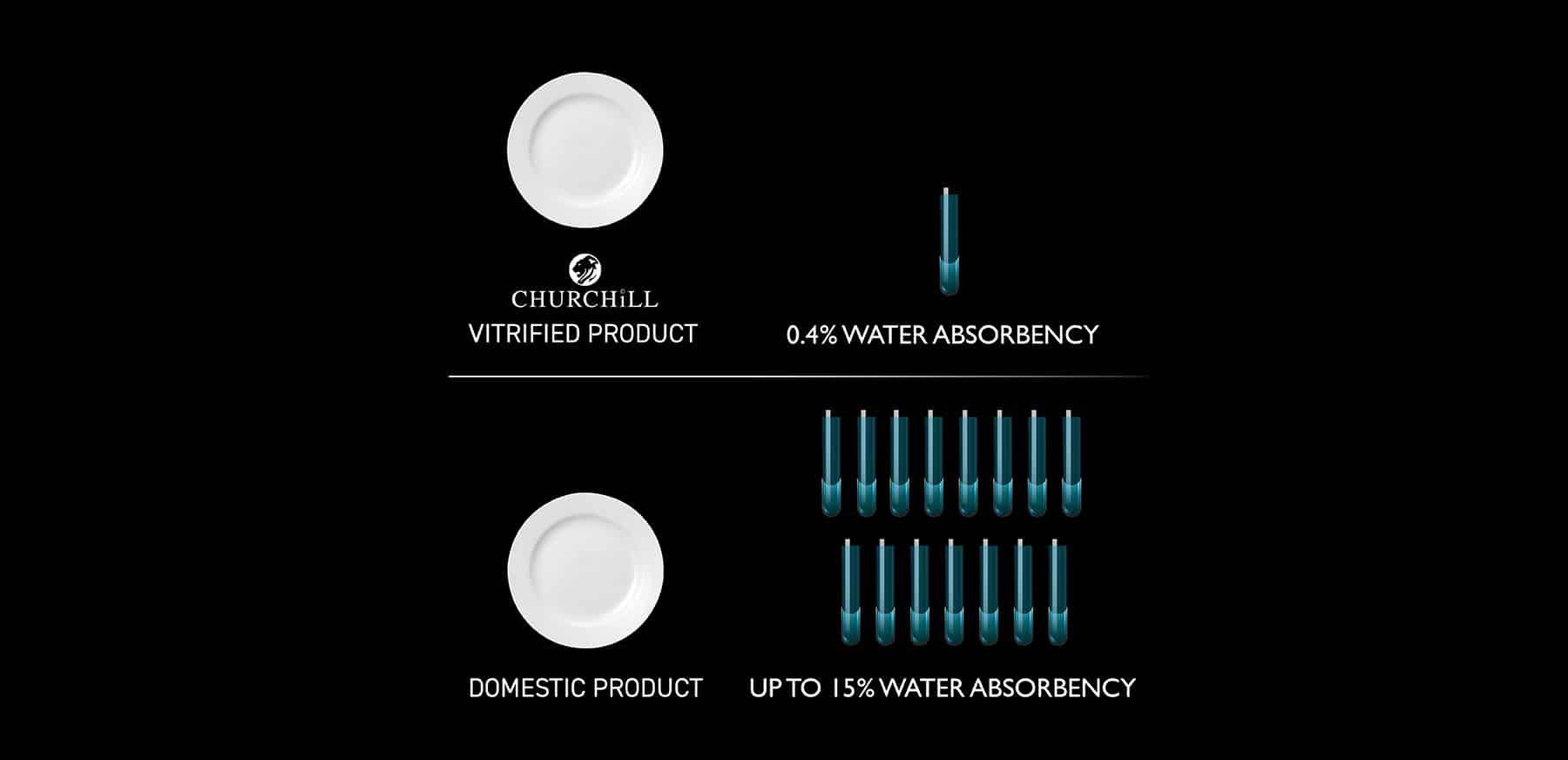
There are four key components to building Food Safety into the Churchill ceramic. The first one being Vitrification. A process through which the particle structure of the plate becomes stronger, denser and impervious to water. Meaning that bacteria has less opportunity to penetrate and grow. Through testing, a vitrified plate absorbs 0.4% or less water this compares to a non-vitrified domestic plate which has the potential to absorb 15% water.  

Shape and Form

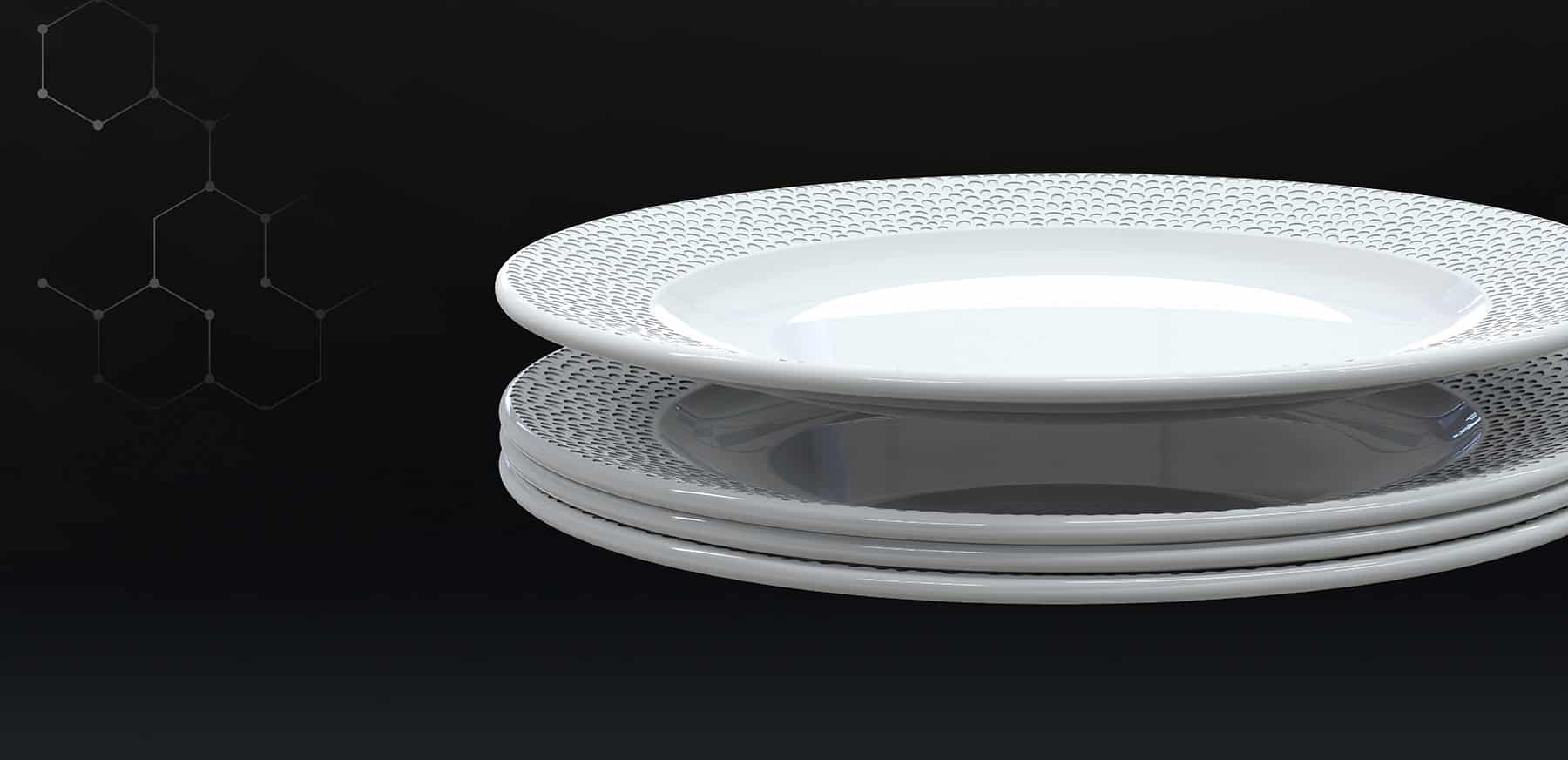
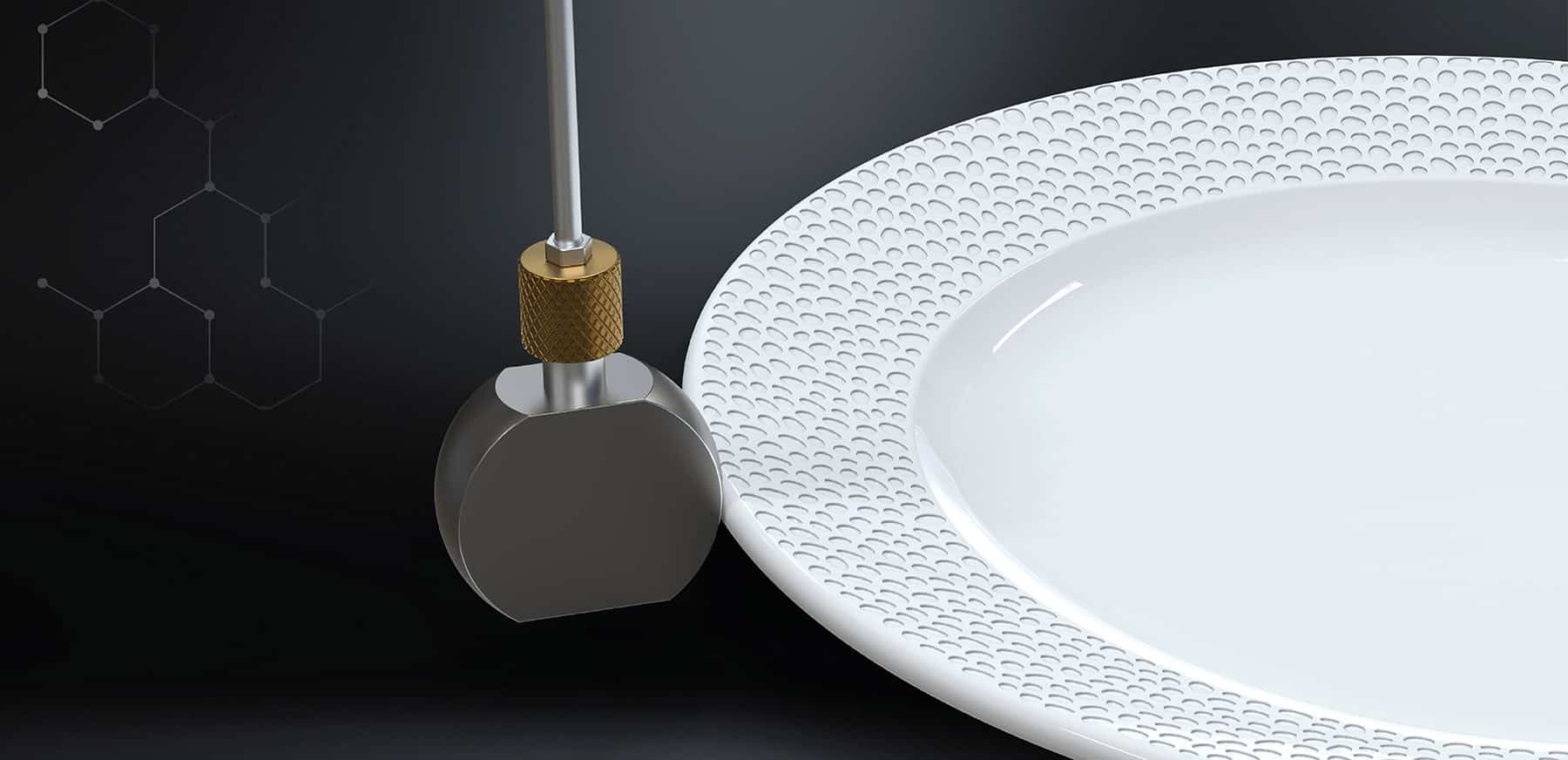
Safety through strength comes from the engineered shape and form. Strength and durability of the Churchill product comes from shape design. Even weight distribution across the foot of the plate and a fully glazed base, reduces pressure points when stacked and minimises scratching risk and bacteria entry points. Whilst strengthened impact areas and rolled edges provides edge chip resistance. 

Superior Glaze

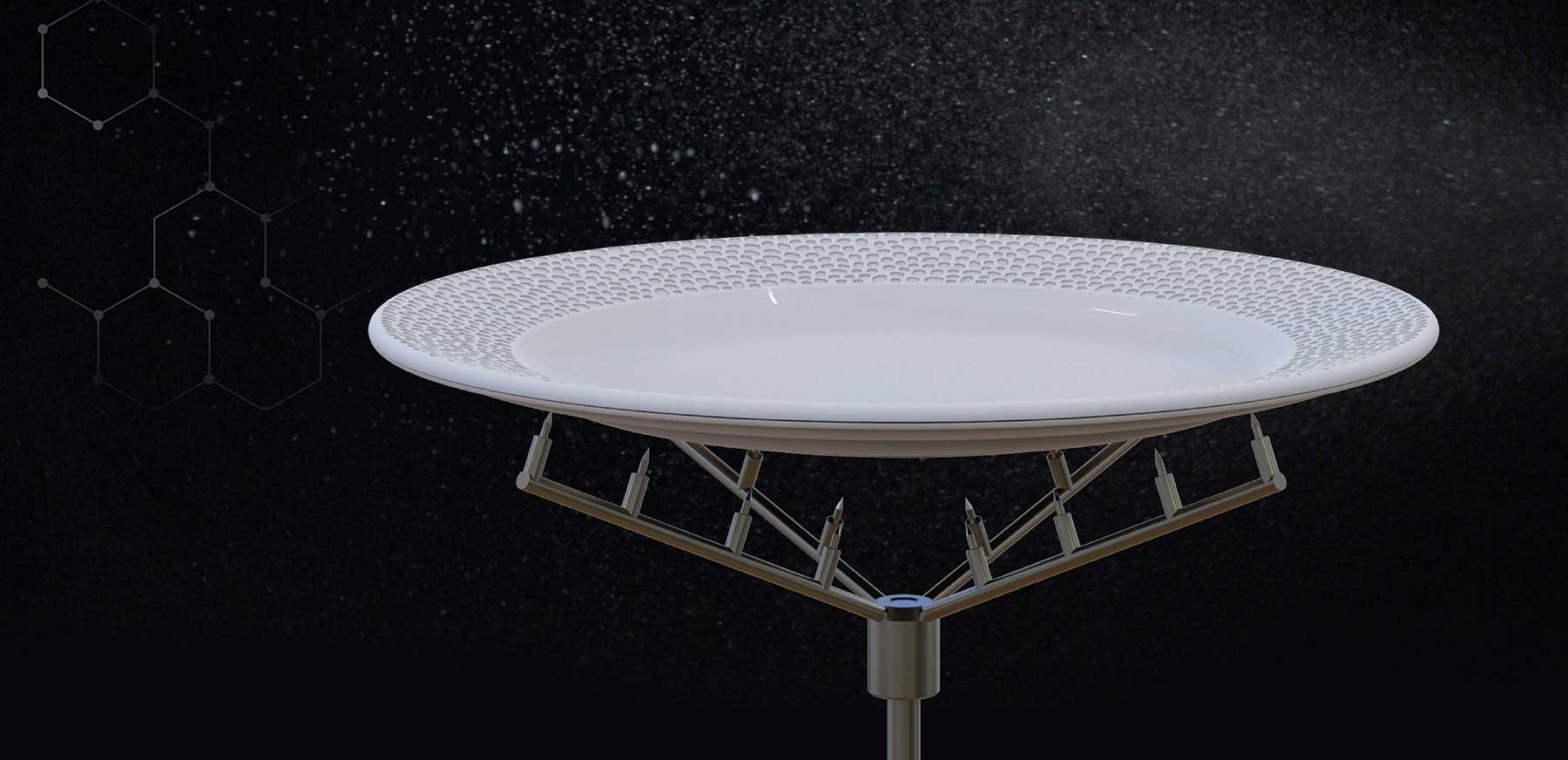
The glaze provides the ultimate barrier and protective surface. A mix of glaze recipe, firing temperature and substrate combine to reduce the surface roughness and support hospitality cleaning and sanitising processes. Including 5000 industrial dishwasher cycles and alkaline sanitisers. 

Consistency in Standards

The final element is testing and conformance. Each piece of ceramic conforms to at least 11 UK, European and International standards. An on-site UKAS accredited laboratory continuously tests and quality checks from raw materials, throughout the manufacturing process to the final piece. Ensuring consistency and continued conformance to standards. 

For more information visit the ‘Performance Delivered’ section of our website. 

What is vitrification and why is it important?

Explainer

Vitrification is a process where we physically change the structure of the clay, closing the gaps between particles and creating a strong, dense and impervious to water product. 100% of our ceramic products are vitrified and we believe it to be essential for professional product to ensure a strong and food safe product.

How do we achieve vitrification?

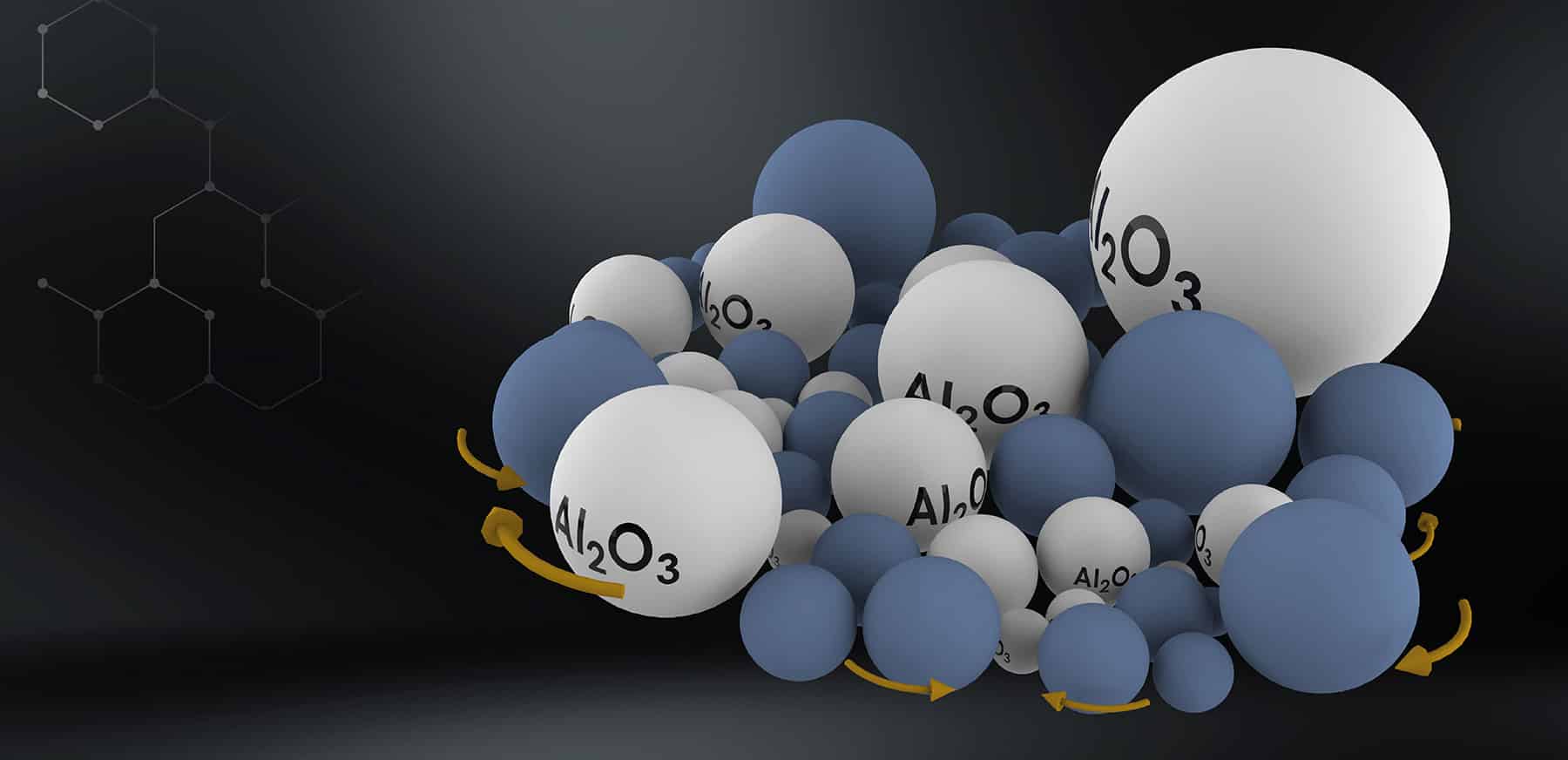
If you were to look under a microscope at a non-vitrified piece of porcelain or stoneware there would be gaps between the clay particles that over time would allow for water absorption.

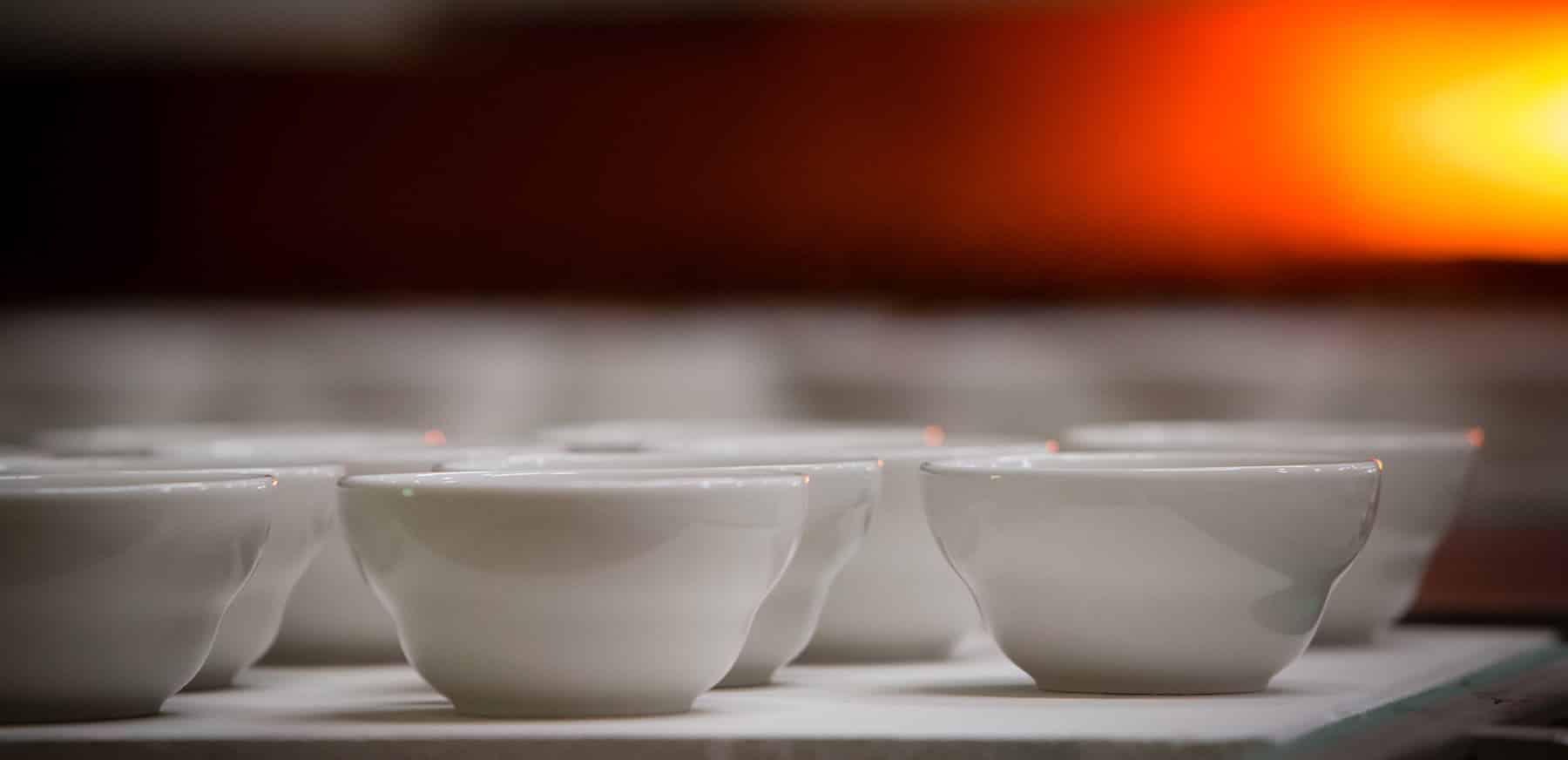
Our unique recipe of performance materials, which have been materially engineered using science and developed over years of experience, combined with a firing temperature of up to 1200 degrees celcius closes these gaps reducing water from getting into the products.

This ensures our ceramics pass the vitrified hotelware standard and produces one of the strongest ceramic tableware bodies in the world.

This image demonstrates how much water can be absorbed into a retail plate compared to a plate which passes the UK standard  that all of ours adhere to.

Why is it important?

Water absorption weakens the physical structure affecting durability. Using vitrification we strengthen the particle structure which means a much more durable product so fewer breakages, chips and therefore replacements.

Vitrification also offers less opportunity for bacteria to be absorbed into the ceramics through liquid, therefore creating a more food safe environment.

How do we test vitrification?

We test vitrification of our products everyday, throughout the manufacturing process. We carry out over 10,000 tests a year to ensure consistency in our own UKAS accredited laboratory onsite.

We test vitrification to 2 standards

  • BS EN 4034 British Standard, European Approved Vitrified Hotelware
  • BS EN 1217:1998 British Standard, European Approved Water Absorption

Eco-Glaze

Explainer

Eco-Glaze is used on all of our ceramic materials made in the UK. The glaze itself has been developed and made to a special and unique formula which means we are able to recycle and reuse excess sprayed glaze material.

Our glaze is hard-wearing and designed specifically for the hospitality environment. The unique formula has also been created to reduce problems such as crazing, scratching and staining.

Reduce, Reuse, Recycle

Eco-Glaze was developed as an initiative to reduce and eliminate waste material from the manufacturing process. To even be able to recycle the glaze was a break-though and then create the stages whereby to first collect the glaze after spraying and then the cleaning process to ensure quality when the glaze is reused.

Eco-Glaze minimises our impact on the environment.

Extended Lifetime

By creating a glaze which is designed specifically for the hospitality industry it is designed to not only be smoother and have a more consistent finish but also be more durable and stand up to the harsher and busier conditions of commercial use.

Durability is created from a combination of the glaze recipe, the firing temperature and ceramic body. This means our tableware is fade, scratch, craze and stain resistant. Making products that last longer and reducing landfill.

Consistency and Quality Standards

Our glaze process is continuously checked for quality and our glaze performance is tested to meet the following industry quality standards:

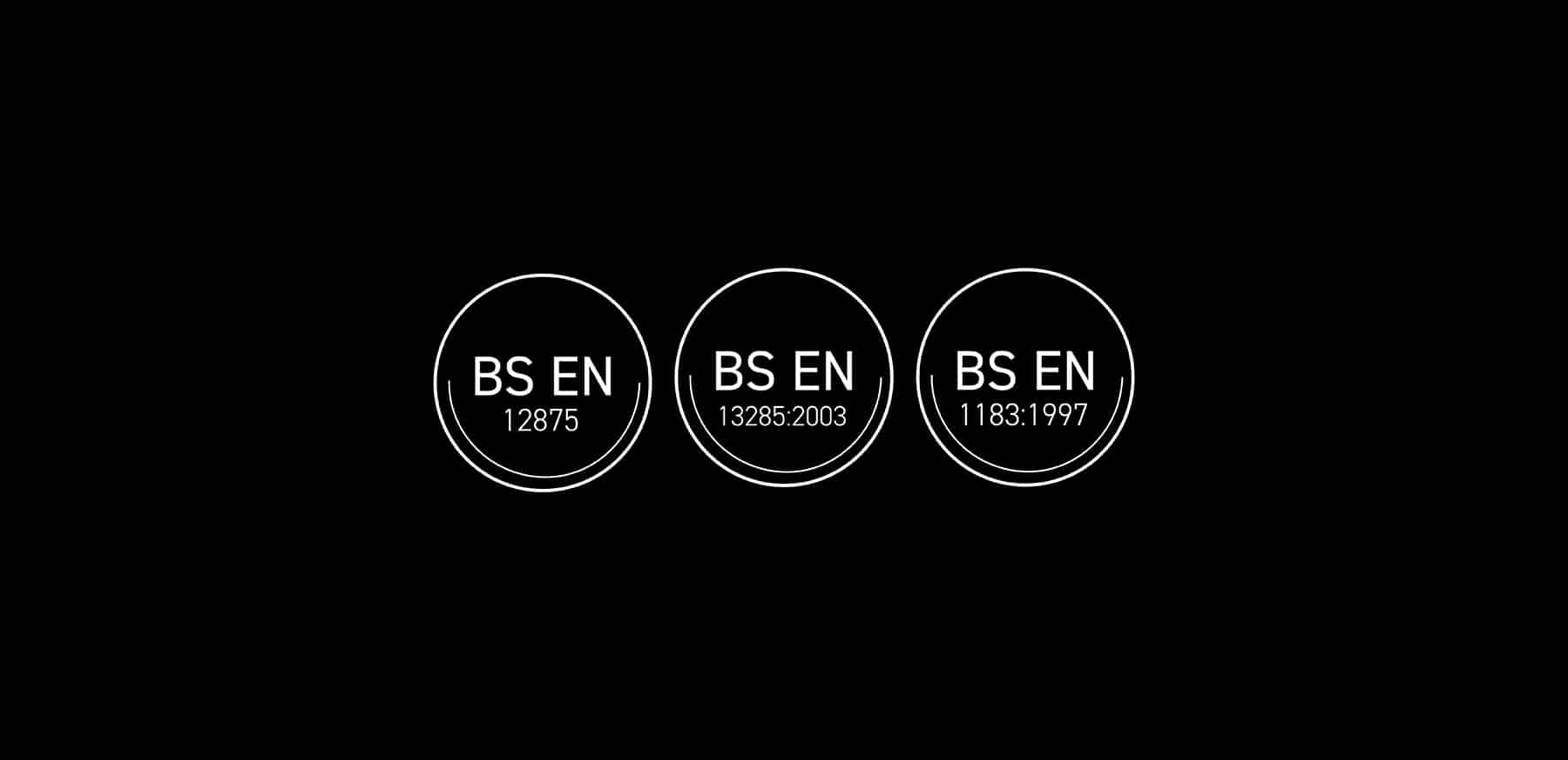
  • BS EN 12875 – Mechanical Dishwasher Resistance – British Standard, European Approved
  • EN 13258 – Crazing Resistance of Ceramic Articles – European Standard
  • BS EN 1183:1997 – Thermal Shock and Thermal Shock Endurance – British Standard, European Approved

explore our website

More from Churchill

Churchill Logo
Privacy Overview

This website uses cookies so that we can provide you with the best user experience possible. Cookie information is stored in your browser and performs functions such as recognising you when you return to our website and helping our team to understand which sections of the website you find most interesting and useful.